There are clothes meant for a specific occasion. And then there are pieces that evolve along with us.
The kimono belongs to the second category: it can be casual or theatrical, simple or elegant. It accompanies you through the leisurely pace of the morning, takes you across the city, and carries you into the evening without losing its identity. Discover how to wear a kimono as a robe, a duster, or an evening gown.
It does not impose a shape on the body. It accompanies it.
And it is precisely this freedom that makes it one of the most fascinating forms of clothing, both yesterday and today.
The kimono as we know it today is the result of a long evolution in Japanese clothing. Its form evolved from the kosode, a garment with relatively narrow sleeves that, during the Edo period (1615–1868), became one of the main forms of Japanese clothing.
The word " kimono," which literally means "something to wear," would not enter common usage until later, in the 19th century.
What is still striking today is its construction: predominantly straight lines, fabric panels assembled with a limited number of seams, and a shape that wraps around the body and is adjusted usingthe obi, the traditional sash. (Victoria and Albert Museum)
It is a concept of clothing that is very different from that of traditional Western tailoring.
Instead of shaping the fabric to the curves of the body through darts and contoured cuts, the kimono creates a space around the wearer.
He doesn't necessarily try to draw the body.
She lets him move.
The relationship with the fabric also follows a particular logic. The width of the fabric pieces has historically influenced the construction of the kimono, and the cut is extremely rational, with straight panels that can be reused and rearranged. (Victoria and Albert Museum)
It is a shape that is not limited to a single body type. In fact, its design allows the garment to adapt to the body through layering and the belt, without relying on the precision of a contoured silhouette.
And it is perhaps precisely here that the kimono appears surprisingly contemporary.
But the simplicity of the form does not at all imply simplicity in the result.
On the contrary.
In a kimono, when the silhouette is minimalist, all creativity can be focused on the surface: the color, the design, the embroidery, the arrangement of the motifs, and the interplay between the different shades.
Mastery lay not only in making a garment well, but also in knowing how to create a composition.
And the combinations could be anything but predictable.
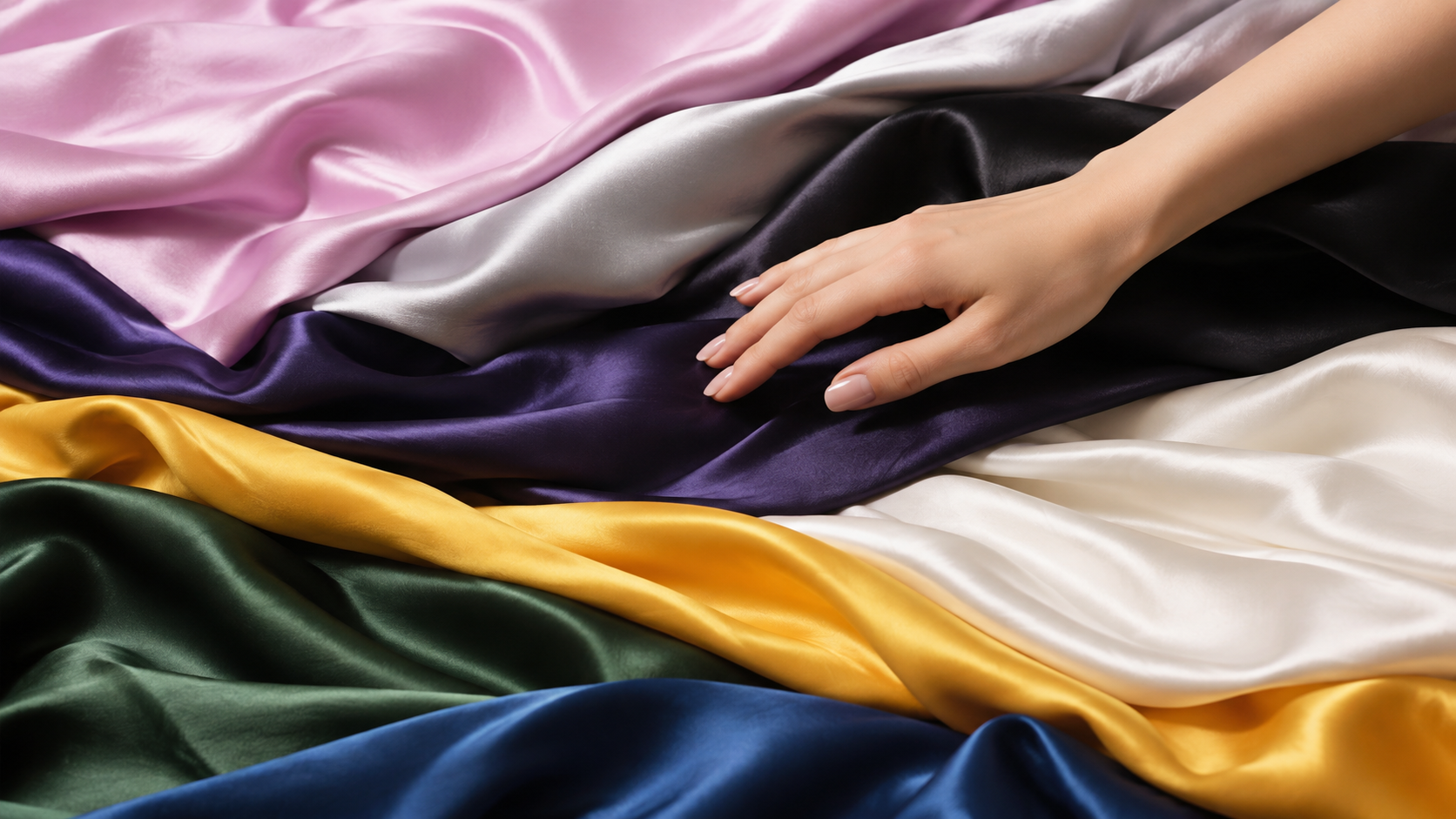
Colors that might seem unusual to a Western eye were combined with great confidence: indigo and mustard yellow, pink and brown, green and gold—deep hues paired with bright colors. The result was not necessarily an “easy” color palette, but rather a more subtle balance. A Meiji-period kimono in the collection of the Metropolitan Museum, for example, plays precisely on the juxtaposition of mustard yellow and indigo blue to create vibrancy through contrast. (The Metropolitan Museum of Art)
This sensitivity also extended to the motifs.
Flowers, water, clouds, animals, landscapes, and plants were not merely decorations: they could evoke a season, a virtue, a good omen, or a literary reference. The pine, bamboo, and plum tree, for example, were known as the “Three Friends of Winter,” associated respectively with longevity, perseverance, and renewal. (Victoria and Albert Museum)
Even the arrangement of the designs could be planned with movement in mind. On some kimonos, key motifs remained partially hidden when the garment was still and appeared only when the person walked. (The Metropolitan Museum of Art)
The kimono, therefore, is not just something you wear.
It's something that comes together.
And this is one of the ideas that still fascinates us today: the possibility of bringing together colors and shapes that seem worlds apart and finding, precisely in their contrast, a new balance.
It is this freedom that makes the kimono's silhouette so appealing even in Western fashion.
The loose silhouette, the straight cut, the voluminous sleeves, and the way the fabric drapes over the body have profoundly influenced European fashion and continue to offer an alternative to the traditional concept of a jacket.
In its contemporary reinterpretation, the kimono can be worn as an outer layer over pants, a dress, a T-shirt, or even a swimsuit.
The context changes.
The basic idea remains the same: a garment that doesn't constrain the body into a predetermined shape, but gives it room to move.
It is precisely this idea that gave rise to Dee D’O’s interpretation of the kimono.

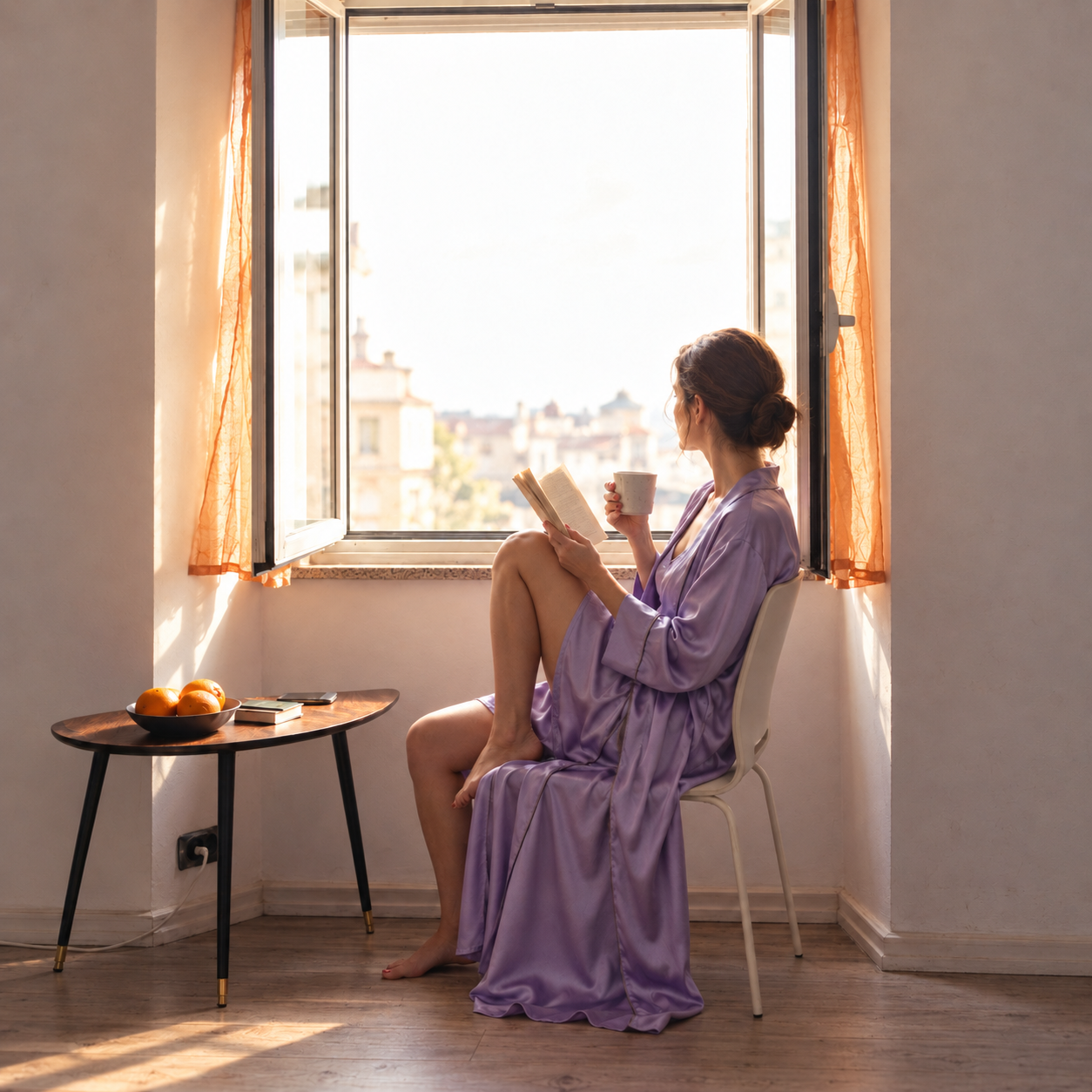
The day can start at a leisurely pace.
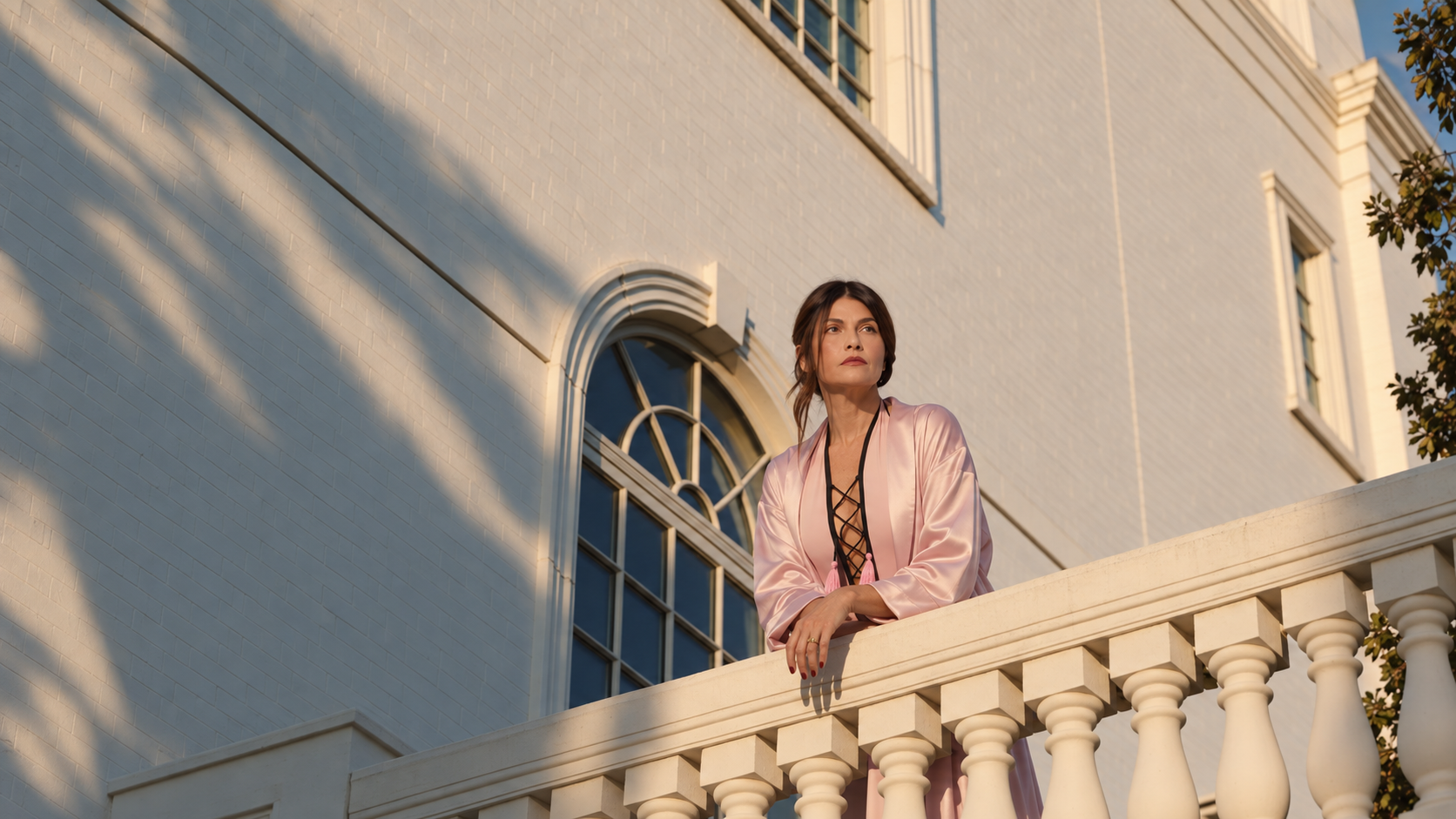
Worn as a robe, the kimono wraps around the body while allowing it to move freely. Worn over a nightgown, a slip, or simply against the skin, it transforms the first movements of the morning into a little ritual.
The Dee D’O pure silk kimono (Silk Kimono) perfectly captures the spirit of the moment. Its flowing silhouette, lined sleeves, and central embroidery on the back give it an elegant look without sacrificing comfort.
Pink with a peony, pearl gray with a koi carp, black with a dragon, or indigo with plum blossoms: each design lets you choose not only a color, but also the symbol with which to start your day.
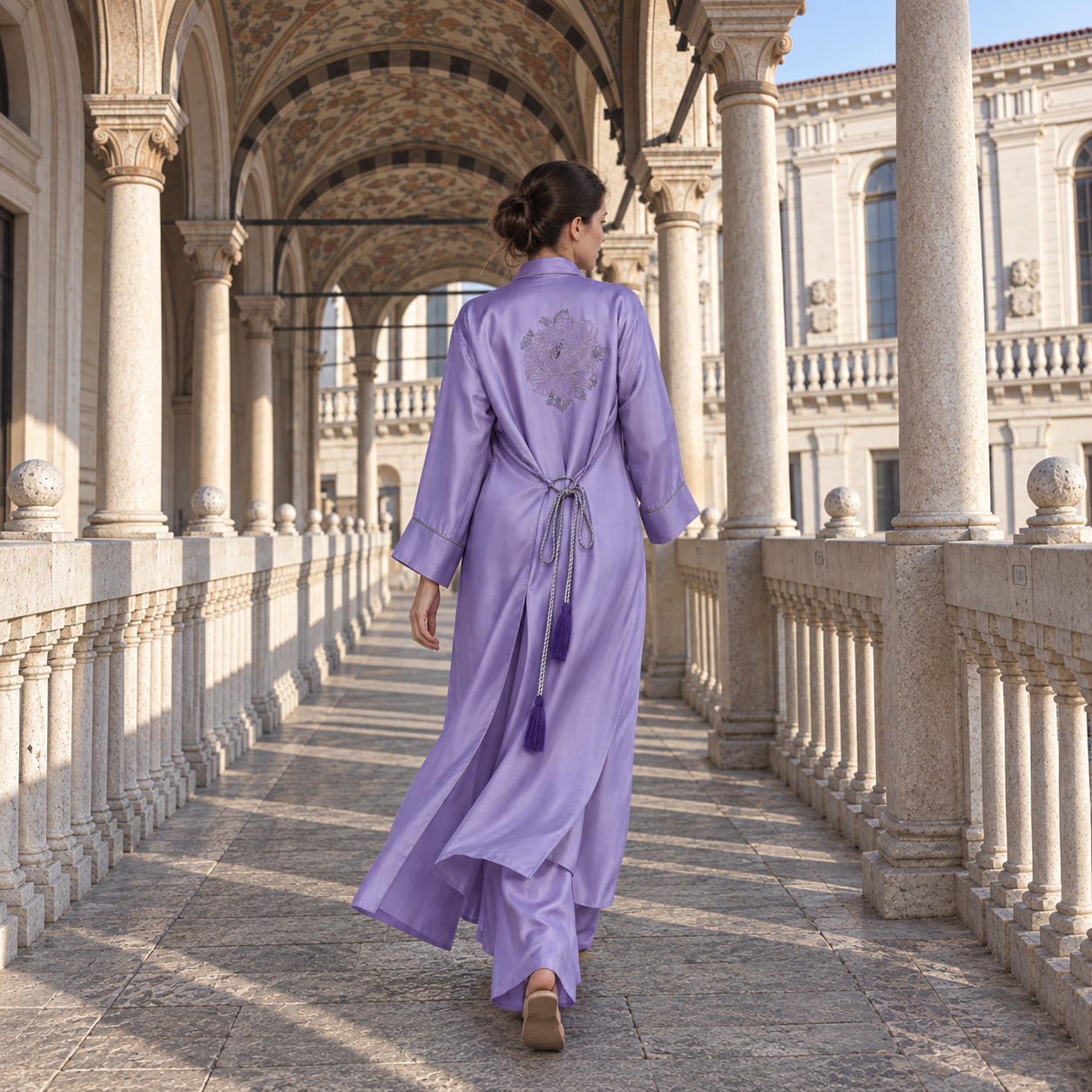
All it takes is opening a door for everything to change.
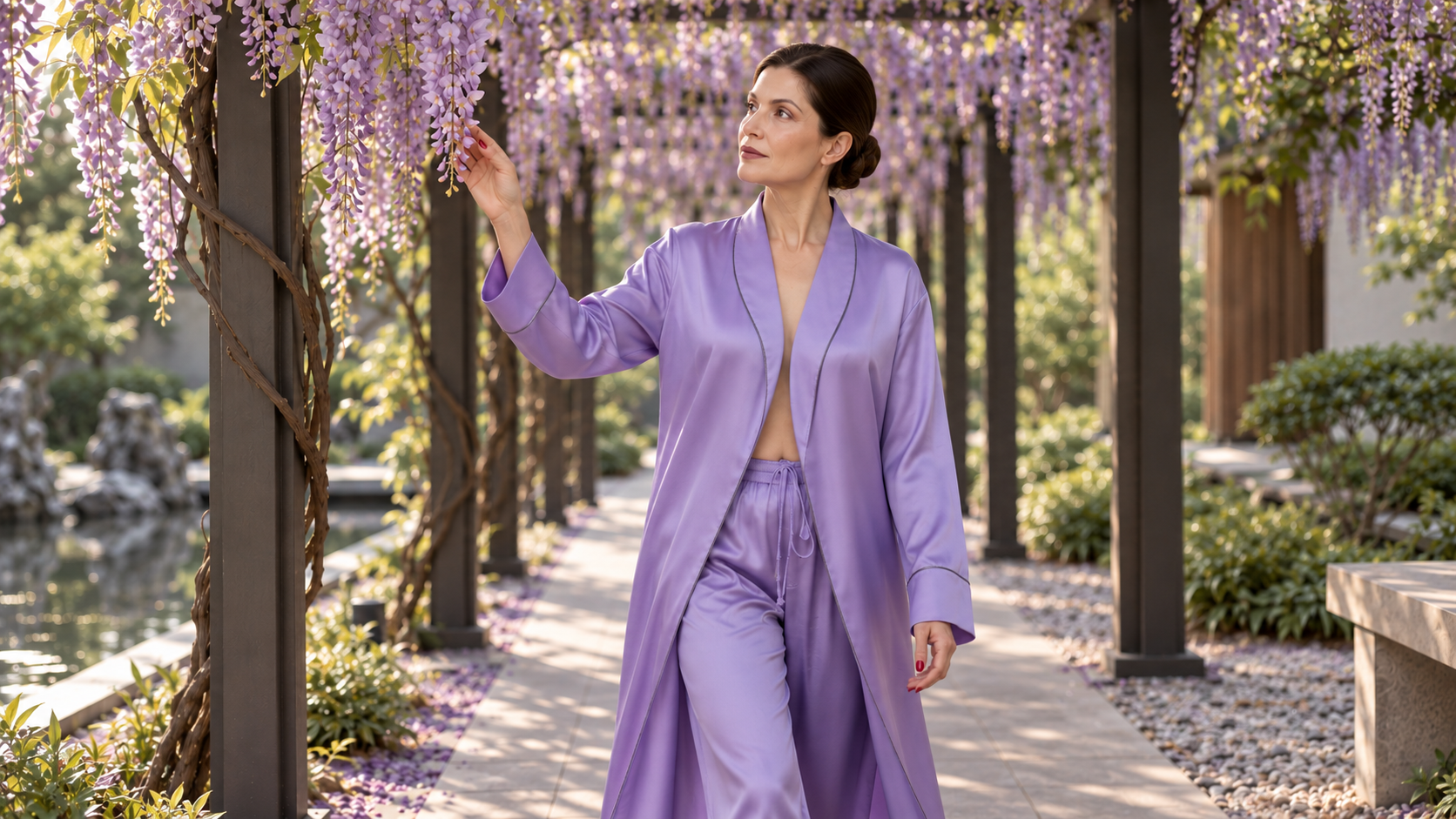
Worn over a simple tank top and a pair of pants, the kimono steps out of the private sphere and becomes a contemporary duster coat.
The secret is to play with proportions: a loose-fitting top pairs well with straight-leg or palazzo pants, as long as the rest of the outfit remains simple.
For daytime wear, this pure linen kimono offers a more textured and natural feel. The silk trim and sleeves, the tassels, and the embroidery on the back add a sophisticated touch, while the linen keeps the garment light and versatile.
It can be left open to create movement or tied at the waist to better define the silhouette.
Paired with silk palazzo pants featuring a drawstring, it creates a flowing, comfortable look, perfect for lunch, a meeting, or a day of travel.
True luxury isn't having a lot of clothes.
It means being able to enjoy many different moments with the same piece of clothing.
In the afternoon, you can wear a kimono over jeans, a T-shirt, or a one-piece swimsuit.
Wide sleeves and embroidery take center stage, while accessories can remain minimal.
A pair of flat sandals, a soft bag, and a few pieces of jewelry are all it takes to create a natural, effortless elegance.
For a bolder look, all you need is a thin belt and a structured shoe.
The kimono doesn't need to be completely transformed.
It is the environment around him that is changing.
When the lights dim, the silk begins to tell another story.
Worn over a simple dress, the kimono serves as a light jacket, but with a more fluid movement and a more dramatic presence.
A silk dress or slip can serve as the perfect foundation: a simple silhouette that allows color, embroidery, and fluidity to shine through.
Made of pure silk and cut on the bias, this slip dress drapes lightly and naturally over the body. Its simplicity allows the kimono to take center stage.
At this time of day, the kimono can be worn open, allowing the silk to flow with every step, or loosely tied to accentuate the waist.
There's not much more to say.
A boss like that speaks for himself.
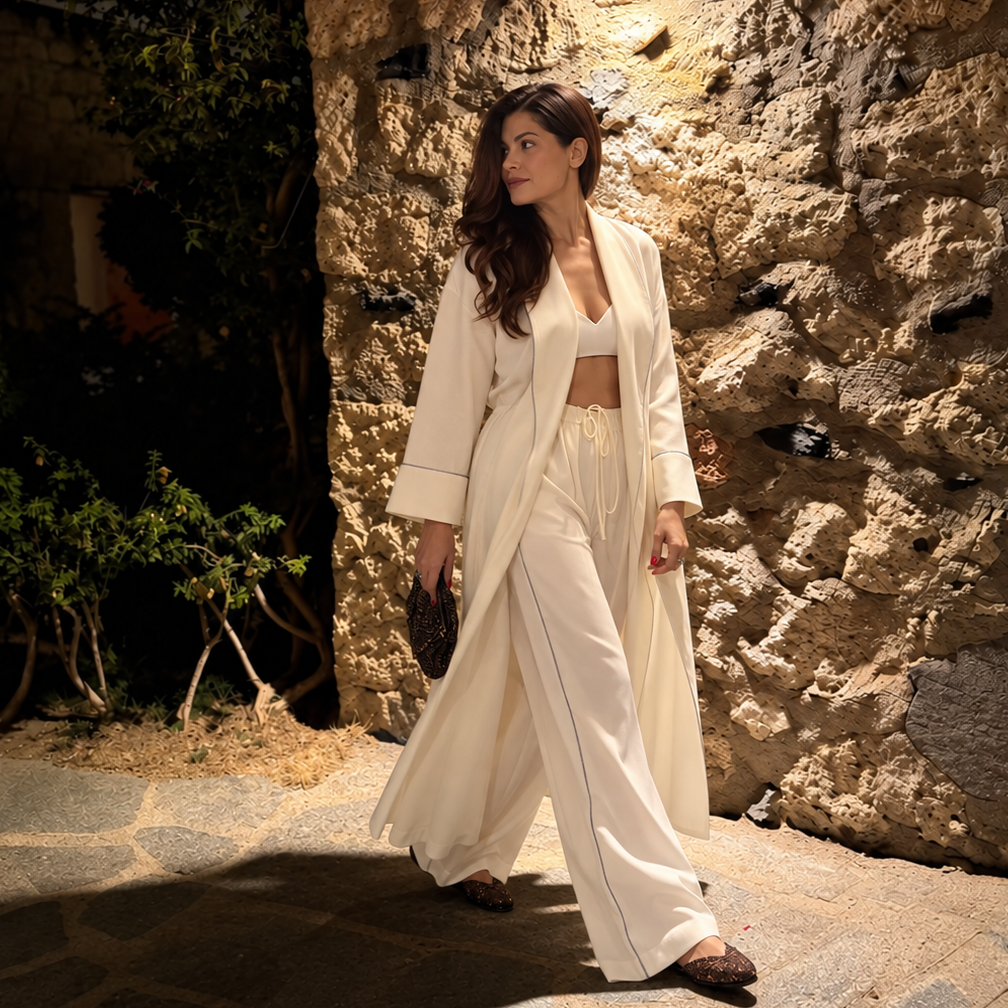
In the evening, the kimono reveals its most alluring side.
The deeper shades, such as black with a dragon print or indigo with plum blossoms, can be paired with silk pants, a slip dress, or an all-black outfit.
A statement shoe and a simple piece of jewelry complete the look without detracting from the embroidery.
This is where the line between couture loungewear and evening wear disappears completely.
What was an intimate gesture in the morning becomes a declaration of presence.
Wearing a kimono also means treating yourself to a freedom that Western fashion often tends to overlook: the freedom to mix and match.
Not everything has to match.
Sometimes it's precisely two colors that seem worlds apart that create the most interesting balance.
An embroidered kimono can be paired with a neutral base to let the color stand out. Or you can opt for a bolder contrast by incorporating a shade from the embroidery into an accessory, a pair of shoes, or a detail of the outfit.
The tradition of the kimono also suggests that we should not be afraid of complexity: patterns can intertwine, colors can create unexpected contrasts, and the composition can be asymmetrical, allowing the design to change as the body moves. In fact, the pattern repertoires of the Edo period show a wide variety of asymmetrical compositions and seasonal references. (The Metropolitan Museum of Art)
The rule isn't to match everything.
It's about finding a balance.
The choice starts with the material.
Silk offers radiance, lightness, and a more sensual drape. It is ideal when the kimono needs to flow smoothly over the body and transform from an intimate garment into an evening wear piece.
Linen, on the other hand, has a natural feel and a more textured quality, making it perfect for casual days and everyday wear.
Then there are the colors and the embroidery.
Peonies, Koi Carp, Dragons, Plum Blossoms, and Waves transform every garment into something personal. They evoke that same tradition in which nature becomes a language and a motif can convey a season, a feeling, or a wish. (Victoria and Albert Museum)
The choice, therefore, isn't just about what looks good.
It also has to do with what you want to convey.
Open-fronted, for a vertical, flowing silhouette. It’s the most natural choice to wear over pants, jeans, or a dress.
Softly fitted at the waist to define the silhouette while preserving the garment's fullness.
Worn over a slip to turn it into a show-stopping piece for an aperitif or an evening out.
Wear them over a simple outfit, so the color, fabric, and embroidery can take center stage.
These are simple gestures, but they completely change the boss's attitude.
From the first light of dawn until evening, the kimono takes on different roles without losing its essence.
A robe, a duster coat, an alternative to a jacket, or the centerpiece of an evening look: it isn’t meant for any specific occasion because it’s designed to adapt to the person, not the other way around.
Perhaps this is precisely its most relevant lesson today.
In a wardrobe often built around the idea of having an outfit for every occasion, the kimono suggests the opposite:
A garment that can be worn on many different occasions.
And also to remind us that getting dressed doesn't always mean choosing a style.
Sometimes it means choosing a space.
A space to move, to change, to pair unexpected colors, and to let the fabric—together with the body—tell the story.
Just one piece.
Many moments.
The freedom to decide, every time, how to wear it. Discover Dee D’O kimonos.
Be the first to shop our latest releases, designed for comfort, confidence, and individuality.