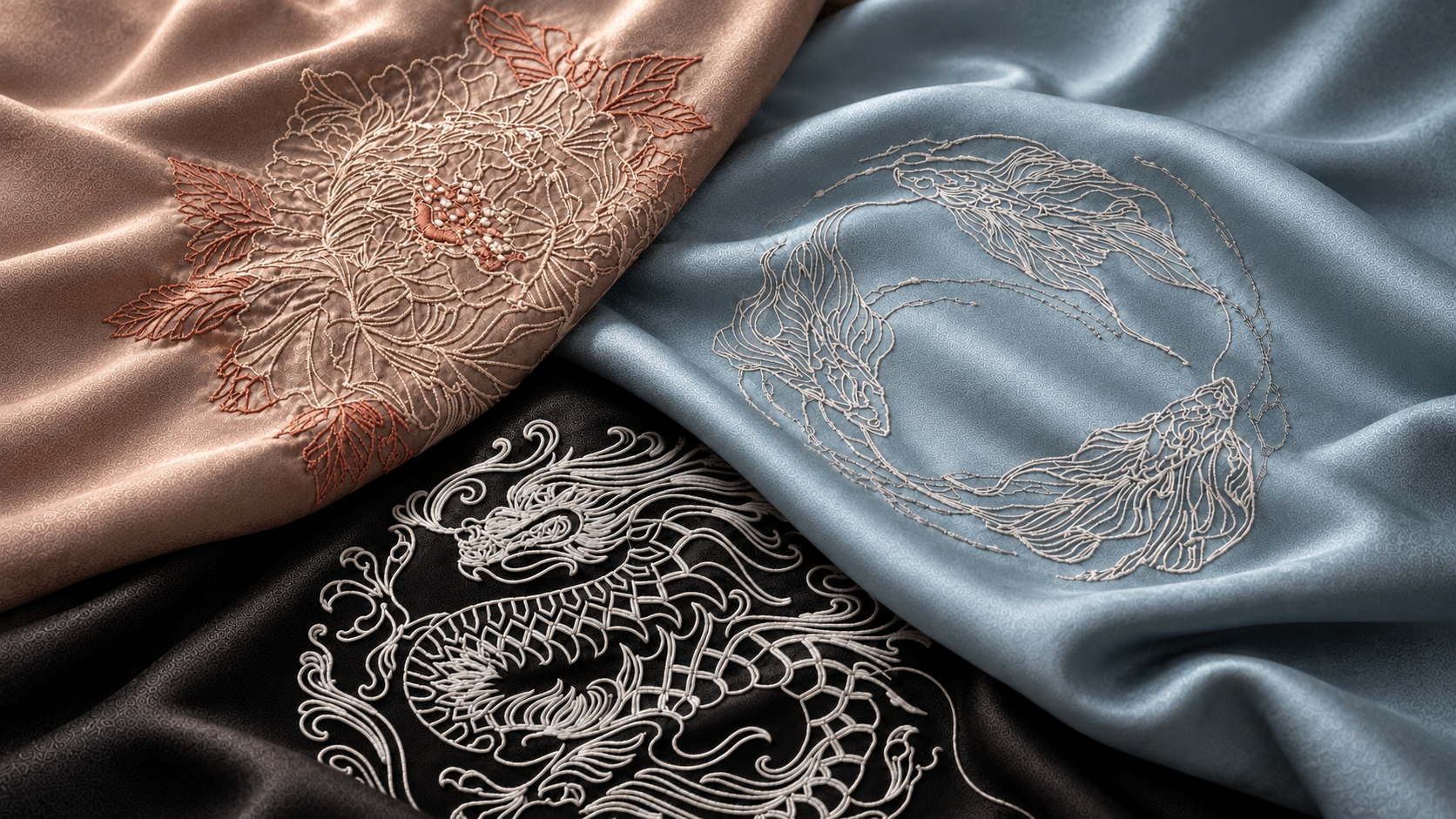
If someone asks me what my favorite color is, I answer without hesitation: that shade of blue which, in Japan, is evoked by the word “aoi” and which, in our part of the world, we recognize in its deepest shades as indigo.
It’s a response that comes naturally to me. I don’t have to think about it. I like that point where blue begins to meet purple: lavender, mauve, lilac, crimson, magenta, eggplant, indigo. I like the way this color seems to hover in between, without fully belonging to one side or the other. Between blue and purple, between light and dark, between day and night.
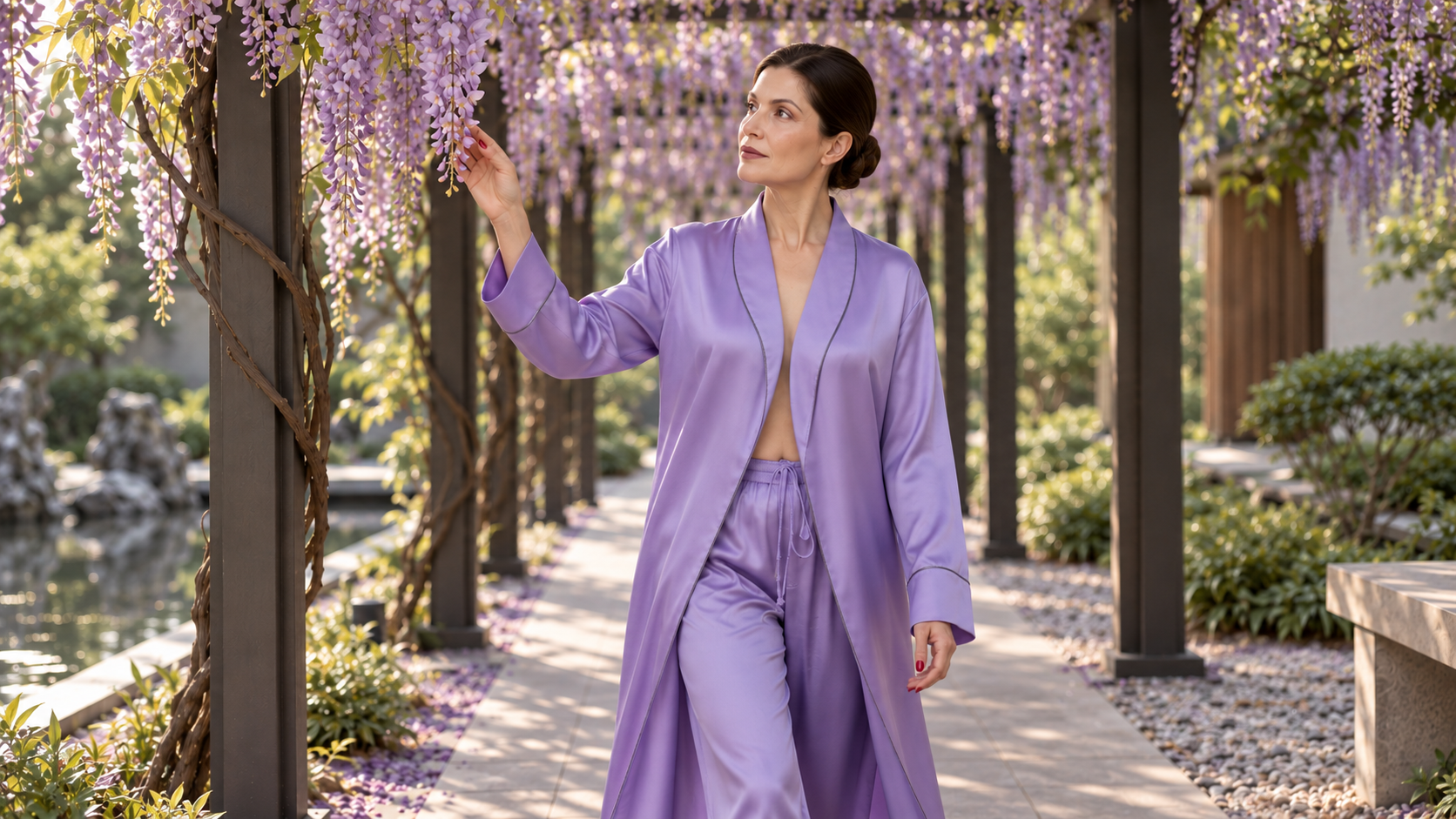
It reminds me of certain summer evenings, when the moon is already visible and the sun hasn’t quite set yet. It reminds me of some of the skies in the Maldives, which, at twilight, seem to blend into the sea. It reminds me of the hydrangeas in the Hamptons, near New York, and the wisteria cascading from the pergolas in the old gardens of Tuscany.
And I think of the great wisteriaat Ashikaga Flower Park in Tochigi Prefecture, Japan: a plant over a century old, cultivated and cared for over generations, until it became a landmark within the landscape.

It wasn't until recently, however, that I discovered a story that made me look at these shades in a completely different light.
In Japan, blue and indigo—what Americans generally refer to as “indigo” —have a history deeply intertwined with culture, craftsmanship, and time. They are not simply shades of blue, but the result of a slow process, almost a form of life that must be cultivated and nurtured.
The story begins with the leaves of the Japanese indigo plant, known as“ai.” After being harvested and dried, they are left to ferment for months, until they slowly transform into a dark substance.
For months.
It's a word that, on its own, makes me slow down.
Perhaps because we’re used to thinking about things only after they’re finished. We look at a piece of fabric when it already has its color, an object when it’s already complete, a person when they’ve already become what we see. We almost never think about everything that made that result possible, how long it took to reach a goal, or what happened before.
In the case of Japanese indigo, however, that “before” is part of history.

In Japan, artisans and families have been passing down the dyeing technique known as aizome from generation to generation. The dried and fermented leaves become sukumo, a dark substance used to prepare the dye bath.
That is precisely where another form of care begins. The vat must be kept under the right conditions, stirred, and fed so that fermentation can continue.
I like to think about this patience. As if the color were something alive, something that depends on someone’s care. If it’s neglected, it loses its strength. If, on the other hand, everything goes as it should, small bluish bubbles begin to appear on the surface. That’s what’s called the “indigo flower.”
This is the signal that the dye bath is ready. That the dyeing process can begin. At this point, you can submerge the fabric.
And this is perhaps where the story gets even more intriguing. After such a long wait, after carefully preparing that tub, you take the fabric and pull it out. And it’s green. It’s not blue; it’s not indigo yet. It’s green.
You have to let it come into contact with the air. When it comes into contact with oxygen, the color begins to change.
Little by little, the green changes. It cools, deepens, turns light blue, then blue, and, with each successive shift, reaches ever deeper shades.
It's almost like magic.
But if you want a more intense color, you have to start over. Back into the water. Back into the air.
And again. Once, twice, ten times, twenty times, thirty times. The color doesn't come all at once. It builds up slowly, layer by layer, until it reaches the desired depth.
I find this process particularly fascinating. Because when you look at a piece of deep indigo fabric, you can’t see all the times it was dipped, the hands that pulled it out of the water, or the days when it seemed like nothing was happening. You see only the result.
I believe this process is a metaphor for the ups and downs of life. We, too, often look at someone and admire their confidence, sensitivity, calmness, strength, and achievements. We see what they’ve become, but we don’t think about everything that led them there. We don’t see the dives that came before.
The failures, the trials that went wrong, the setbacks, and the times he had to start over. We don’t see the days when it felt like he was always stuck in the same place, nor all those little things repeated so many times that they eventually became a part of us.
And yet it is precisely those that make up the color.
Maybe that's why I like indigo so much. Because it's not an immediate color. It takes time, care, and steps that, taken one by one, seem almost invisible. The color builds up almost imperceptibly, until at some point you realize you've achieved the right shade.
A slow process.

We're a bit like that, too. We go through experiences whose meaning we often don't grasp right away. It seems as though we aren't changing, as though we're always stuck in the same place. Then, one day, we pause and realize that something is different.
We can't say exactly when it happened. There wasn't necessarily a specific moment or a clear turning point. We only know that, dive after dive, we've become a different version of ourselves.
And perhaps that is what I like most about indigo: the fact that its final color also contains all the time that came before it.
Because now, when I think of that color, I don’t just see a shade somewhere between blue and purple. I see time, care, and waiting. I see a plant, leaves left to ferment for months, a tub that someone keeps tending to. I see a green piece of fabric that comes into contact with the air and, slowly, changes.
And I think that maybe we’re like that, too: we don’t become who we are in a single moment, but through all the times we’ve had the courage to start over. The color we see in the end is simply the sum of all the times we’ve gone back into the water.
Before indigo became indigo. Before blue became blue.
A sensibility rooted in color, texture, and time—one that is also central to Dee D’O’s vision.
Be the first to shop our latest releases, designed for comfort, confidence, and individuality.